On 9 June, the Chilean Congress approved a Technology and Knowledge Transfer bill (Ley de Transferencia de Tecnología y Conocimiento) that makes important strides towards open science and knowledge sharing in Chile.
The new law will be “part of the history books of how Chile — from the universities, from the innovators — implemented and learned along the way, very quickly,” said Ximena Lincolao, Chile’s Minister of Science, Technology, Knowledge and Innovation, at a 24 June webinar discussing the law, adding “Tech transfer is often seen as a niche. But it is not. [This] will change how Chile operates, from being a raw materials exporter to an exporter of knowledge.”
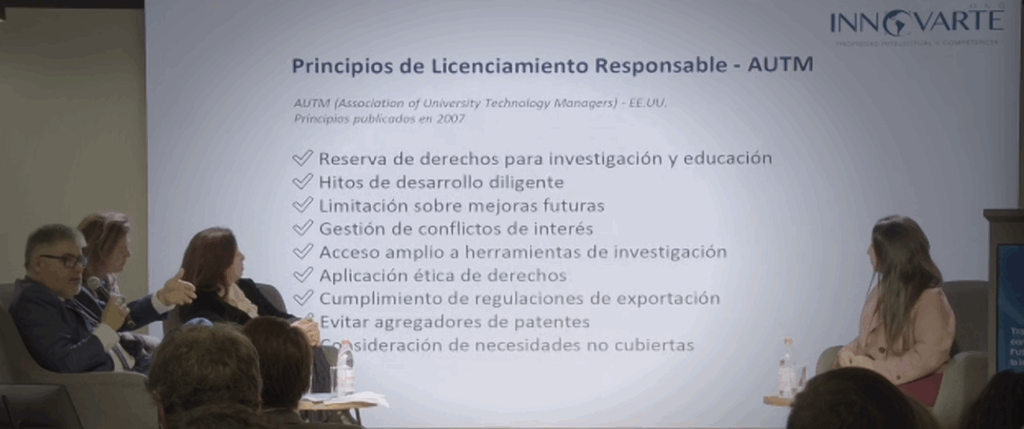
Of particular significance in the bill is a commitment to create incentives for Chile’s universities and public research institutions to engage in socially responsible licensing. Socially responsible licensing is a form of intellectual property sharing that prioritises access to the licensed technology for the public good, as differentiated from licensing agreements where the primary focus might be, for example, business cooperation. Socially responsible licences contain clauses such as: non-exclusivity, which allows for market competition that can bring prices down; an affordable access plan, which creates an actionable strategy for access and affordability; a reservation of right to research using the technology (sometimes also including any improvements on the technology made by the licensee); and “march-in” rights that allow the original technology holder to step in when obligations are not met. Socially responsible licensing aims to maximise the public benefit of advancements in human knowledge.
Public benefit should be guaranteed for innovations developed with public funds, such as those coming from universities or public research institutions. But in practice, public innovation is often captured by private enterprises that then charge high prices. For example, gene therapy Zolgensma – famously the most expensive medicine in the world at $2 million a dose – had its early research funded by small charities and taxpayers, while its eventual list price benefited primarily the pharmaceutical company that bought its marketing rights. Another example: the basic research at the core of the Moderna mRNA Covid-19 vaccine was developed by researchers at the US National Institutes of Health. Moderna’s CEO was later called to testify before the Senate to explain price hikes on the vaccines whose underlying technology was originally financed by US taxpayers. Examples like these means the public is paying twice: First through government subsidies to innovators and second through paying high prices for medicines”.
Socially responsible licensing is a critical mechanism to prevent this, and was added to the Chilean bill during the two years legislative process between its proposal and the version that passed Congress.
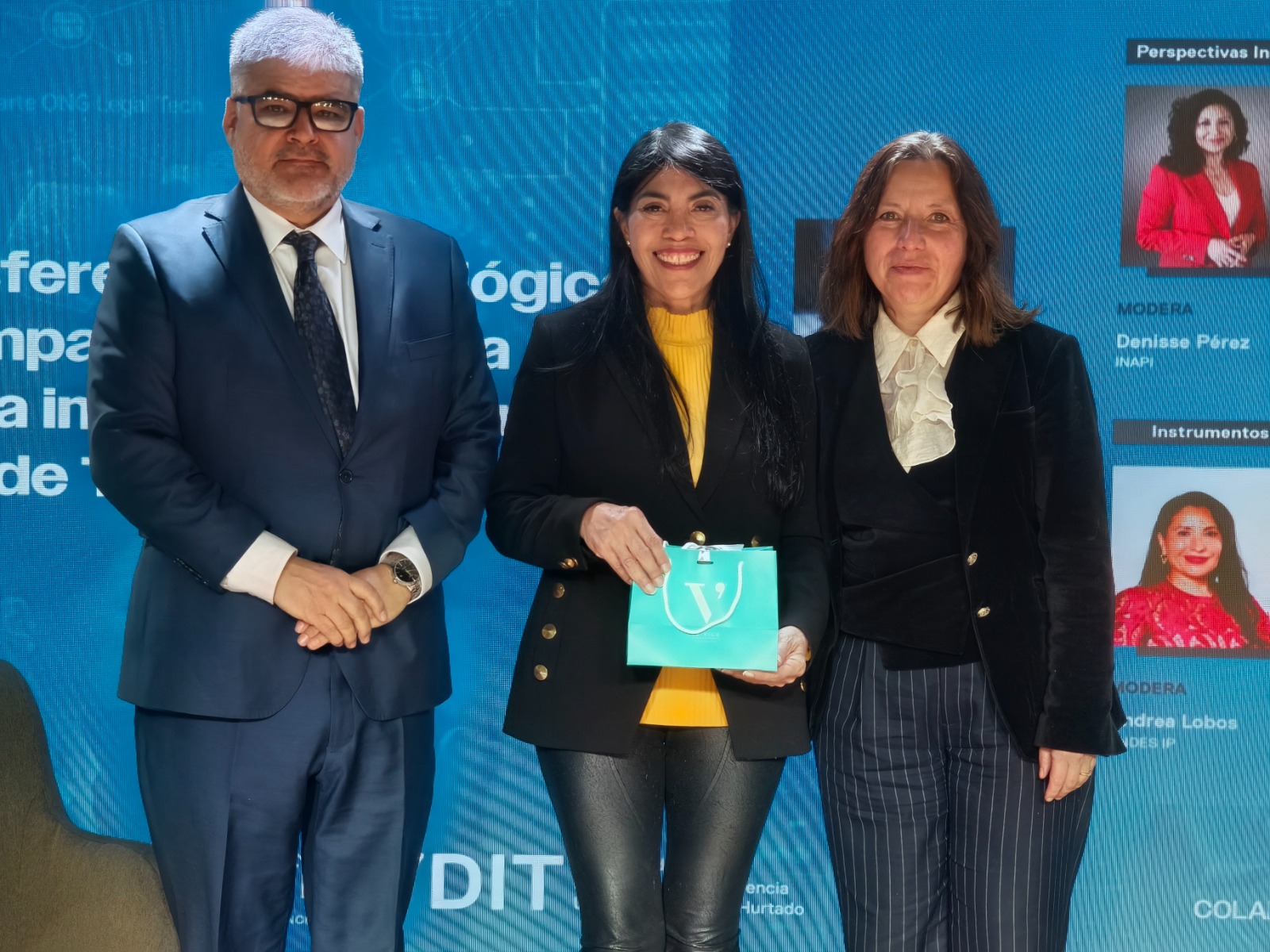
Credit for this addition goes to Chilean NGO Innovarte. In January of 2025, Innovarte in collaboration with the Chilean National Institute of Industrial Property (INAPI), the country’s authority on intellectual proprety, organised a seminar on “Voluntary and Socially Responsible Licensing”, which attracted 150 representatives of technology transfer offices, technology managers, innovators, and public policy officials. This was followed by a second meeting in May 2025 to promote socially responsible licensing and a roundtable in July 2025 specifically involving some 50 Chilean universities. In the final quarter of 2025, Innovarte published the report “Different Approaches to Incentivize Voluntary Licensing”, presenting it to policy makers at the side of the WIPO Standing Committee on the Law of Patents.
“Innovation creates not only an economic value, but also a social value,” said Innovarte’s Director Luis Villarroel at the 24 June webinar. “Knowledge becomes the solution to the issues and challenges of our society.”
Article 5(f) of the bill now commits the ministries of the Science, Technology, Knowledge and Innovation and of Economy, Development and Tourism to “encourage the socially responsible licensing of technologies developed with public funding”. It adds:
For the purposes of this Act, ‘socially responsible licensing’ shall be understood to mean the process by which the use, exploitation or application of the results, technologies, knowledge or innovations arising from research projects developed with public funding are granted to third parties through licence agreements or other equivalent legal instruments, under conditions in which social commitment, equity and public responsibility take precedence, promoting equitable access to and the ethical use of such innovations.
In addition to the socially responsible licensing commitment, the bill also will:
- Art 6: Create a National Repository of Scientific and Technological Information, to be governed by Chile’s National Agency for Research and Development, to contain free and publically accessible information on: all R&D projects receiving public funding; information and data produced from those projects; and information needed to identify applicants for patent or plant variety protection. As a requirement of receiving public funding, researchers will be required to place a copy of their data into this respository. It is a signficant step forward in encouraging transparency in innovation markets, which global health advocates have linked to as a key factor in encouraging affordable access to technology.
- Art 9: Proactive encouragement of transparecy. Article 8 enables higher education institutions to establish science and technology based enterprises on basis of their research findings; Article 9 requires those that do so (regardless of whether or not they have received public funding) to keep up-to-date information on those companies, including their ownership and shareholders. The need for transparency in medicines markets became a World Health Organization norm in 2019, with the adoption of the World Health Assembly resolution 72.8 (Improving the transparency of markets for medicines, vaccines, and other health products).
- Art 12: Defining the rights and obligations of researchers receiving public funds. This article enables publicly funded researchers to apply for intellectual property rights (and then must report that activity to the National Agency for Research and Development). If they do not take measures to protect their industrial property rights, then their research results fall into the public domain and be made available through the National Repository.
“Innovation should be measured in more than patents…. lives saved, an increase in quality-adjusted life years, jobs created, and the amout of tax paid by a new enterprise” are perhaps better indicators, said Michael Mbogoro, Head of the Technology Transfer Section at the World Intellectual Property Organization at the 24 June event. The key, he added, is “what conditions are needed for innovations to reach people?”
Officially designated “Boletín N° 16.686-19”, the Technology and Knowledge Transfer bill began as a March 2024 message from then-president Gabriel Boric to the Chilean National Congress, noting that Chile was lagging behind other high income countries in the contributions of R&D to its economy, and calling for an improved legal framework to transfer technology from research bodies to benefit society and industry. The final version of the bill as passed is available here in Spanish, and as a machine translation into English here. The next step is for the bill to be sent to the current president of Chile, José Antonio Kast, to check for consitutionality, after which it will be published in the Diario Oficial and enter into force 6 months after publication.

Kaitlin Mara, MSc, has been writing about international intellectual property and innovation policy for over 15 years.