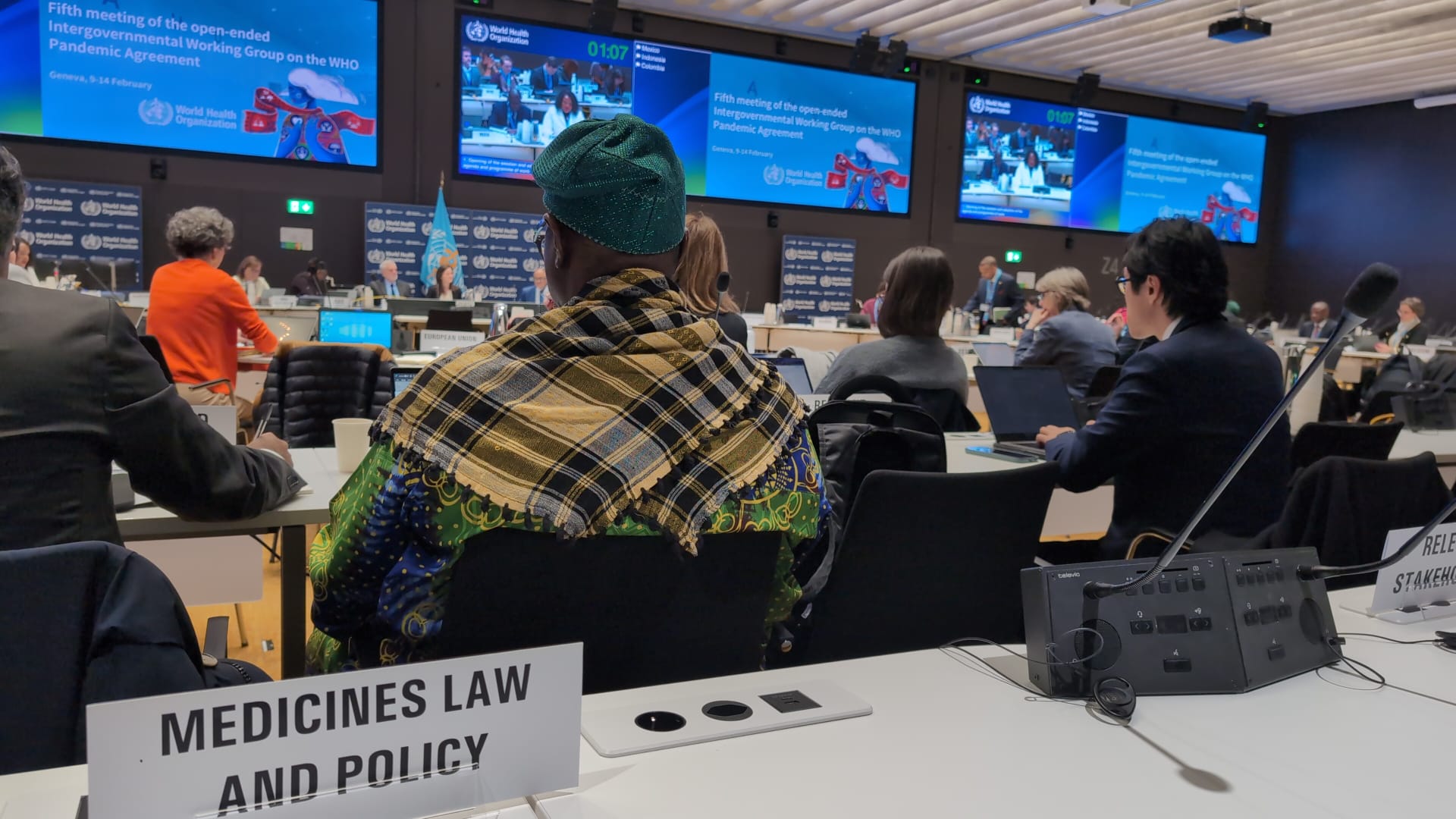
Co-chairs, Thank you for the opportunity to say a few words.
My comments address issues related to technology transfer (TT), a topic we have been following throughout the INB negotiations for the Pandemic Agreement and now at the Intergovernmental working Group (IGWG) tasked with negotiating the Pathogen Access and Benefit Sharing (PABS) system to be an annexed to the Pandemic Agreement.
During the COVID-19 pandemic, manufacturers seeking to produce vaccines in or for developing countries were often unable to obtain the necessary TT. The COVID-19 experience showed us that TT cannot be left to the voluntary actions of rights holders only. Something we have observed also in other pandemics, including HIV.
The provisions for TT in the Pandemic Agreement are weak. At the first session of the IGWG, I expressed hope that the IGWG would be an opportunity to agree on stronger obligations in TT and know-how sharing.
The last draft of the PABS annex however, seems to further cement the notion that TT can only be on voluntary and mutually agreed terms (VMAT). One even finds this qualifier in articles meant to create firm obligations (see: Section C Art. 1. (c )iii.5. and Art. 2.(c) iv.).
Of course, voluntary TT and licensing are very important, but in their absence, it is equally important that governments can intervene. We therefore warn against provisions in the PABS Annex that further limit the legal options and policy space countries have to access health technologies. This issue was also raised by delegates at the recent 158th WHO Executive Board meeting in relation to references to “voluntary and mutually agreed technology transfers” in the Draft updated Global Action Plan on Antimicrobial Resistance (AMR).
Medicines Law & Policy has documented over two decades of government interventions, known as TRIPS flexibilities, undertaken by low-, middle-, and high-income countries to access health technologies (including COVID-19 products). This research was published on 28 January this year by the British Medical Journal-Global Health. We are happy to share the paper with the Bureau and delegates.

Ellen ‘t Hoen, LLM PhD, is a lawyer and public health advocate with over 30 years of experience working on pharmaceutical and intellectual property policies.